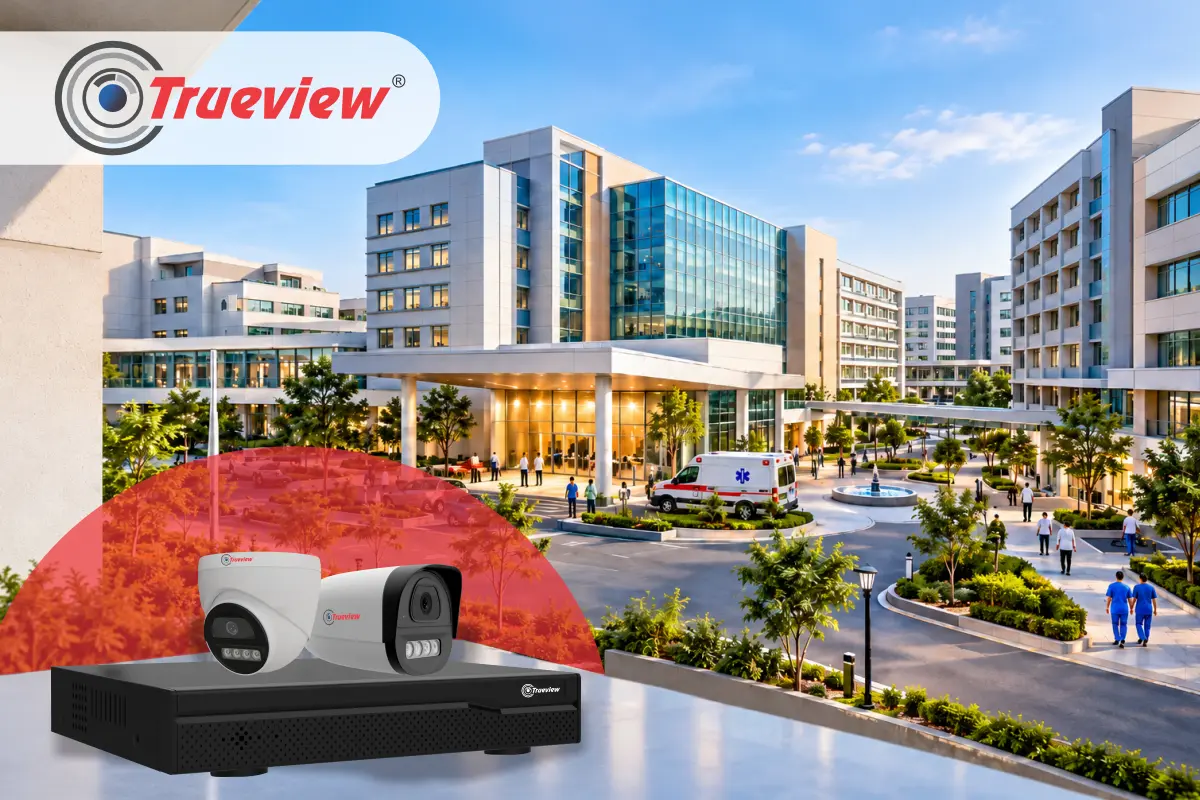
A large hospital campus needs more than cameras at the main entrance. With multiple buildings and busy areas, such as OPDs, emergency departments, patient wards, diagnostic centers, pharmacies, and parking lots, hospitals need camera coverage tailored to each location.
A well-planned Hospital CCTV Camera system helps healthcare administrators monitor access points, common areas, review security incidents, and improve visibility across multiple buildings. However, installing cameras without a campus-wide plan tends to create blind spots, makes footage hard to retrieve, and complicates everyday security operations.
Trueview understands the Healthcare campus layout, each camera’s purpose, network availability, and footage storage requirements. A combination of suitable CCTV Cameras, network video recorders (NVRs), and cloud recording options helps healthcare facilities develop a practical surveillance plan based on their operational needs.
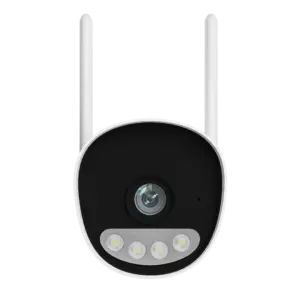


In this blog, we explain how hospitals plan surveillance across multiple buildings, select suitable Hospital CCTV cameras, and monitor large healthcare campuses. Keep reading!
Why Centralised Security Camera for Hospitals are Required

A single camera at the hospital entrance isn’t enough to ensure security across the entire campus. A centralised Hospital CCTV Camera system allows security teams to monitor these areas from one place, making it easier to keep track of activity across the facility.
1] Understand the Campus Before Selecting Cameras
- Every building has varied security needs and installation requirements.
- Planned CCTV coverage is needed across emergency departments, administrative offices, staff entrances, parking facilities, etc.
- Mapping of these areas helps hospitals to identify surveillance priorities.
2] Reduce Gaps Between Buildings
- Security planning comprises connecting roads, pedestrian pathways, loading zones, campus boundaries, etc.
- Identify the areas that reduce blind spots and avoid unnecessary camera duplication.
3] Simplify Monitoring Across Locations
- Security teams need an organised way to view feeds and retrieve recordings across buildings.
- Trueview provides NVR systems and the True Cloud App that support remote camera access and management of multiple CCTV devices for multiple locations.
Identify the Most Important Areas for Hospital CCTV Cameras
The first step in planning Hospital Security Cameras is to divide the campus into zones. Each zone has a defined purpose, helping the hospital decide the camera type, mounting position, viewing angle, recording requirements, and more.
1] Main Entrances and Reception Areas
- Monitor visitor entry points, reception desks, waiting areas, staff access routes, etc.
- Place cameras so security personnel can review entry and exit activity without obstructing patient movement.
2] OPDs and Public Corridors
Evaluate common areas where patients, attendants, staff, and visitors cross throughout the day. Wide corridors will require several cameras to be installed in order to avoid blind spots at turning points and intersections.
3] Emergency Entrances and Ambulance Bays
Ensure vehicle access points, emergency entrances, ambulance bays, etc. are covered, as these areas should remain visible at all times.
4] Parking Areas and Campus Boundaries
Protect vehicle entry points, parking lanes, gateways, access corridors between buildings, and more. An outdoor camera system is ideal where these installations are feasible.
5] Pharmacies, Stores, and Service Areas
Focus on important areas such as entrances, reception counters, storage rooms, loading docks, employee walkways, etc. Placing cameras in the right locations helps hospitals monitor daily activities, improve security, and respect staff and patient privacy.
Clinical areas require extra care. Do not install cameras randomly in private spaces, and their placement always follow patient confidentiality guidelines and hospital access policies.
Estimate Recording and Storage Requirements Before Installation
Planning storage ahead of time helps hospitals store and manage CCTV footage without running out of space. The amount of storage needed depends on multiple factors such as the number of cameras, video quality, recording hours, compression settings, and how long the footage needs to be kept.
1] Compare Local and Cloud Recording
- Compatible NVR systems allow hospitals to store CCTV footage in one central location.
- Cloud recording offers convenience by letting authorised users access and review footage remotely when needed.
- Trueview TrueCloud recording ecosystem offers subscription plans with options such as 3-day and 7-day motion recording, along with 24×7 recording.
- Before choosing a plan, hospitals should check whether the available storage and retention period meet their security needs and footage-recording requirements.
2] Establish a Footage Retrieval Process
Label each camera clearly, allow only authorised personnel to access recordings, and securely save important footage whenever an incident occurs.
Protect Patient Privacy and Control Camera Access

Hospital CCTV Camera improve security while ensuring that patients’ dignity and privacy are not breached.
Clear surveillance policies allow hospitals to decide where cameras belong, who accesses recorded footage, and how long recordings are kept to review later.
1] Set Clear Access Permissions
CCTV Camera access depends upon the roles and responsibilities of the staff members. Individual usernames and permissions ensure that footage is encrypted.
2] Review Sensitive Locations Carefully
- Work with clinical and privacy teams to decide where cameras need to be installed.
- Be extra careful when installing cameras in rooms where patients receive treatment.
- Check the legal, consent, and privacy policies before using audio recording.
3] Audit and Test the System
- Regularly check who has access, whether cameras are positioned correctly, and whether recordings work properly.
- These checks help identify connection problems and recording failures before they affect hospital security on a large scale.
A well-managed Security Camera for Hospitals protects them while supporting responsible, privacy-conscious surveillance.
Common Mistakes to Avoid When Planning Hospital Security Cameras
Even a large surveillance budget may fail to deliver useful coverage if the system is poorly planned. Hospitals should avoid these common mistakes.
- Installing Cameras Without a Site Survey: Conduct a survey of all the premises of the healthcare campus before installing a CCTV Camera. A camera count does not highlight whether key entrances, corners, or connecting routes are covered.
- Using the Same Camera for Every Location: Indoor corridors, exposed parking areas, remote gates, and reception spaces have different requirements. Choose the equipment according to its purpose and specifications.
- Ignoring Network and Power Limitations: A wireless camera needs a reliable power supply unless the model uses an alternative power source. Also, check network capacity and mobility.
- Underestimating Storage: Recording quality, duration, and number of cameras highlight the storage requirement. Evaluate before installing a CCTV Camera system.
- Overlooking Privacy: Avoid monitoring sensitive clinical spaces. Establish appropriate access controls, policies, and review procedures.
- Failing to Test the System: Before handover, ensure live viewing, recording, playback, remote access, naming of cameras, and outage plans are all tested.
- Planning Only for Current Requirements: Be sure there is room for future expansion, such as additional cameras and storage capacity as well as additional building connectivity.
Takeaway
Planning a Hospital CCTV Camera system for a multi-building healthcare campus requires more than installing cameras at visible points. Hospitals need to identify building layout, movements of patients and visitors, outdoor surveillance, connectivity, storage, monitoring, privacy, and more.
The right Hospital Security Cameras depend on the location and its needs. Wired cameras work well in buildings with existing network connections, while WiFi or 4G cameras suit areas with reliable connectivity. All recordings and access permissions should follow hospital policies and privacy rules.
A well-planned CCTV system helps hospitals stay secure today and makes it easier to add more cameras as their needs grow. Explore our CCTV Cameras to find a reliable and flexible surveillance solution for your healthcare campus.
About Trueview

Trueview is India’s leading technology brand, offering surveillance, display, and educational technology solutions for a wide range of environments. Our surveillance range includes WiFi cameras, 4G cameras, Wireless NVR systems, cloud recording solutions, and more.
Beyond surveillance, we provide display solutions for commercial applications and educational technology for classrooms and institutions. We focus on practical usability, reliable operation, and scalable deployment so organisations can plan their technology infrastructure around their current requirements and future growth.
For healthcare facilities, our team begins by understanding the campus layout, connectivity, recording requirements, and operational priorities. One camera type and installation method will not work for every location; it is important to do the prior analysis for evaluating the ideal CCTV Camera for Hospitals. We aim to support informed technology decisions with solutions suited to the needs of modern Indian institutions.
Smarter hospital security starts with the right plan! From emergency entrances to multi-building surveillance, choose Trueview Security Camera for Hospitals.
Contact us today to plan a scalable surveillance solution for your healthcare facility!