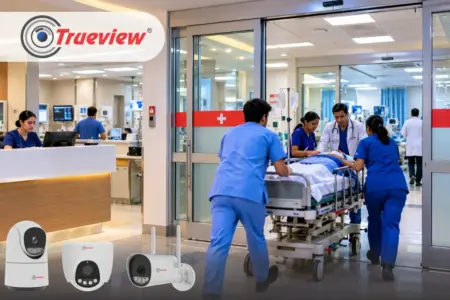
Emergency departments and trauma centers operate in high-pressure environments where every second matters. Doctors, nurses, paramedics, patients, attendants, and support staff move through different areas throughout the day and night. Medical teams must respond quickly to emergencies while hospital administrators maintain a safe environment for everyone.
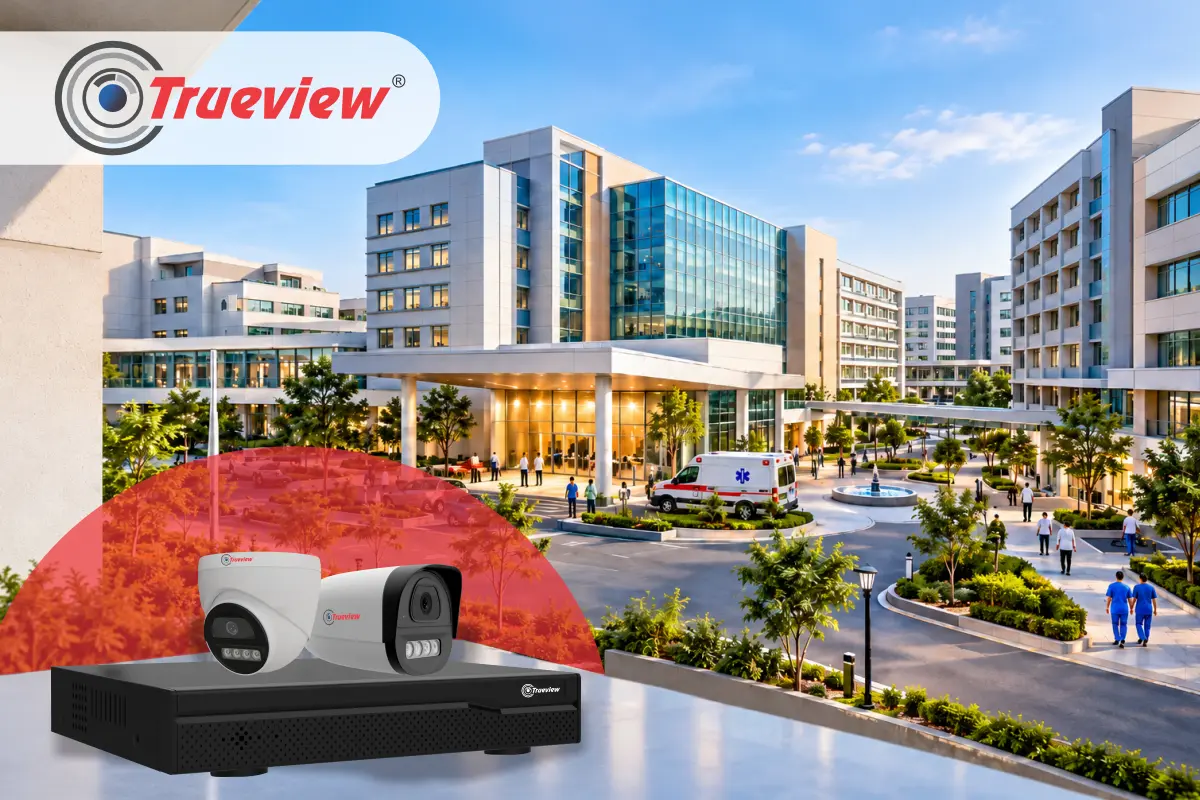
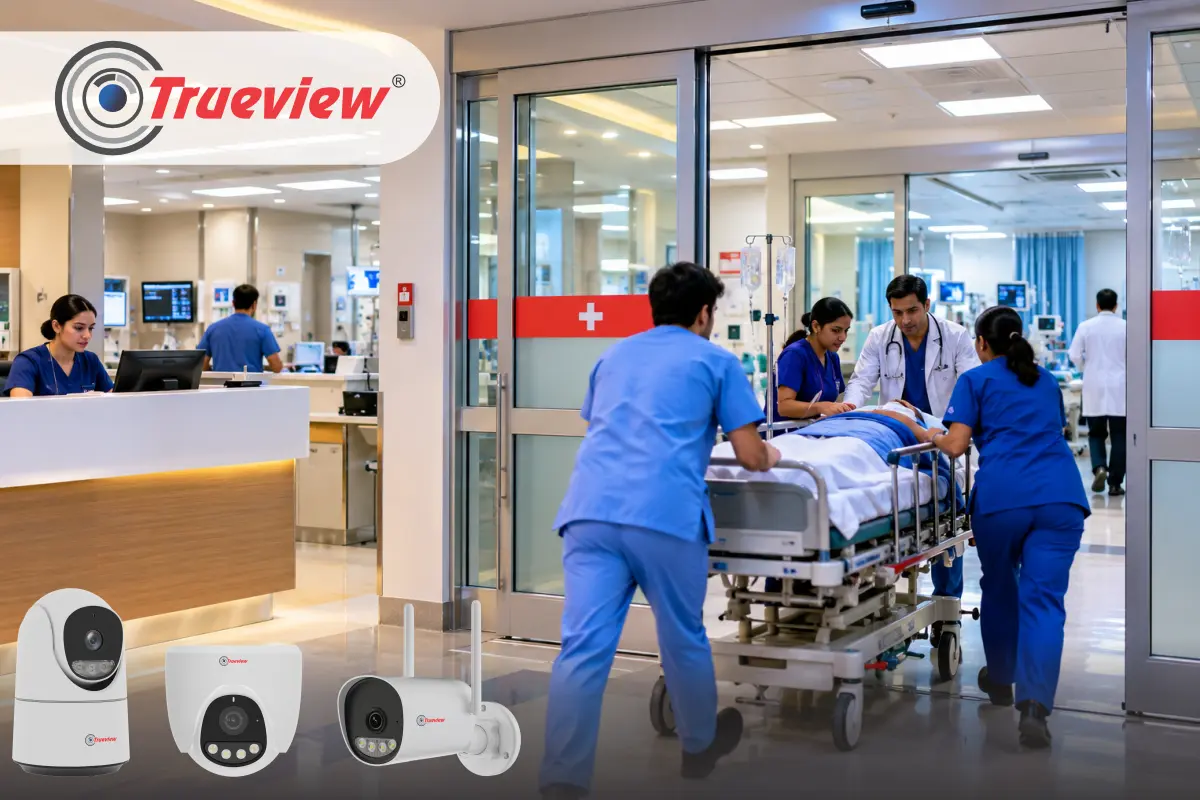
Hospital Security Cameras play an important role in monitoring access points, observing public areas, reviewing security incidents, and supporting hospital security teams. A well-planned CCTV system helps hospitals monitor busy entrances, waiting rooms, corridors, ambulance bays, pharmacies, and other designated areas without disrupting essential medical work.
In this blog, we will explain how to choose the best Security Camera for Hospitals, which areas deserve attention, and how healthcare administrators plan a reliable surveillance system for emergency departments and trauma centers. Keep reading!
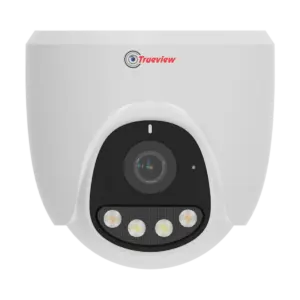


Why Hospital Security Cameras are Important in Emergency Departments
Emergency departments have unique security challenges. Patients arrive at unpredictable times, waiting areas become crowded, and staff need to manage a stressful situation, including patients and visitors.
1] Monitoring Entrances and Visitor Movement
Even when visitor areas are closed, emergency entrances stay open. Properly installed CCTV Cameras help hospital staff monitor who enters and leaves.
Hospitals should consider coverage for:
- Main entrance to the emergency departments.
- Arrival of ambulances and patient transfer zone.
- Main entrance to the hospital.
- Reception counters for visitors.
- Corridors connecting emergency departments with other hospital areas.
The objective of installing a hospital surveillance system is to improve visibility across public and access-controlled areas. It allows healthcare professionals to perform duties without interference.
2] Supporting Staff safety
Emergency department staff often face aggressive behavior, arguments, and disputes involving visitors and others. CCTV footage helps authorised hospital personnel review reported incidents and understand what has happened.
3] Reviewing Incidents and Complaints
When a security incident occurs, recorded footage helps authorised teams establish a timeline. Hospitals analyse recordings on the basis of continuity, storage space, synchronisation of time, and procedures to retrieve footage before choosing their Hospital Security Cameras.
Best Places to Install a Hospital CCTV Camera

Camera placement has a direct impact on how useful a surveillance system will be. Even a capable camera cannot provide meaningful coverage if it faces the wrong direction or its view is blocked by equipment, doors, or crowds.
1] Emergency Entrances and Ambulance Bays
- Emergency entrances are among the first areas hospitals should assess. Hospital Security Cameras will allow security staff to watch vehicles, people, and other activities in relation to entry points.
- Select outdoor cameras based on the installation environment, lighting conditions, weather exposure, available connectivity, etc.
2] Waiting Areas and Registration Counters
- Waiting areas become crowded during peak hours. A Hospital CCTV Camera positioned to cover the general public area helps security teams monitor movement and respond to disputes.
- Registration counters also benefit from suitable surveillance coverage, particularly where staff interact with large numbers of visitors.
- Hospitals should avoid placing cameras where they unnecessarily capture sensitive documents, computer screens, or confidential patient information.
3] Corridors and Connecting Passages
- Emergency Departments, Diagnostic Centers, Wards, and other Service Units may have hallways that have a continuous flow of traffic.
- Proper camera placement will allow appropriate individuals to analyse any incident.
- The camera layout depends on various factors such as corridor length, lighting, ceiling height, obstructions, and the number of junctions, etc.
4] Hospital Pharmacies and Medical Supply Storage
- Trueview cameras support incident reviews and provide visibility around authorised entry points.
- Hospitals use appropriate inventory controls, access permissions, operating procedures, etc.
5] Staff-only and Service Entrances
- Service entrances, equipment rooms, and other restricted areas also benefit from CCTV coverage.
- These cameras help the hospital operate in line with its policies without affecting confidential clinical operations.
What to Look for in Hospital Security Cameras

Not all camera types are appropriate for hospital settings. Here are a few things to consider before choosing a camera.
1] Clear Video in Changing Light
Emergency areas are usually well-lit, but corridors and parking lots get dark at night. So, choose cameras with good night vision.
2] Efficient Video Compression
Trueview cameras support H.265+ compression, which reduces file sizes while maintaining good video quality. Thus, helps hospitals store continuous footage without running out of space quickly.
3] Two-Way Audio
Two-way audio is useful at entry points and reception areas. Truview cameras comprise a built-in microphone and speaker, so a control room operator can speak to someone at a gate or restricted door.
4] Motion and Human Detection
In a busy emergency department, constant motion alerts are not helpful. Human detection and area motion detection are available on Trueview CCTV models and help to reduce unnecessary alerts.
5] Flexible Storage
You will want footage stored safely and be easy to retrieve. Selected Trueview Cameras support microSD cards up to 256GB, and cloud recording is also available.
How Cloud Recording Can Improve Hospital Surveillance
Cloud recording helps hospitals securely access surveillance footage when reviewing incidents involving staff, visitors, restricted areas, and more.
1] Accessing Recorded Footage
- Facilitates access to incident reviews involving staff, visitors, equipment, and restricted areas.
- It supports access to recorded footage. It supports recording to compatible applications like True Cloud App.
2] Choosing the Right Recording Plan
- Trueview offers flexible cloud recording plans, including 3-Day Motion Recording, 3-Day 24/7 Continuous Recording, 7-Day Motion Recording, and 7-Day 24/7 Continuous Recording, to suit different user needs.
- Hospitals can select cloud storage plans based on their surveillance and footage-retention requirements.
3] Protecting Sensitive Footage
- Implement access control and footage transfer for hospital cameras.
- It will ensure clear policies on retention, access, footage sharing, and more.
- Combine cloud recording with hospital security and data governance processes.
Common Mistakes to Avoid When Choosing a Security Camera for Hospitals
Hospitals plan CCTV installations around daily operations, security requirements, patient privacy, etc.
Mistakes to Avoid
- Choosing Cameras on Price Alone: Consider installation, storage, maintenance, connectivity costs, etc., before making a decision.
- Ignoring Blind Spots: Check camera angles and coverage to make sure all important areas are monitored.
- Overlooking Recording Requirements: Confirm the recording methods, retention period, footage retrieval, and more.
- Using Improper Connectivity: Check WiFi or mobile network coverage at the installation location.
- Ignoring Future Expansion: Ensure that the system can accommodate additional cameras and storage as hospital surveillance needs to grow.
Takeaway
Choosing the Best Hospital Security Cameras for emergency departments and trauma centers starts with understanding how each area operates. Different areas have different surveillance needs, such as busy entrances, ambulance bays, public waiting areas, corridors, pharmacies, and restricted-access points.
Camera selection for hospitals depends on factors such as coverage, image quality, lighting conditions, connectivity, recording capabilities, storage, and integration with existing systems.
Our Hospital CCTV Camera system supports security monitoring, incident reviews, and access oversight when combined with trained security personnel and clear operating procedures. Privacy is always a priority in emergency and trauma centers where patients receive sensitive treatment.
If you want a reliable, scalable security camera for hospitals built for Indian conditions, Trueview is a dependable choice.
About Trueview

Trueview is the prominent Indian technology brand offering solutions across surveillance, display technology, education, commercial applications, and more. We specialise in technology solutions that help organisations become more visible, communicative, and efficient.
Our surveillance range includes WiFi Cameras, 4G Cameras, wireless NVR systems, cloud recording solutions, and more. Beyond surveillance, we provide display solutions for commercial environments and educational technology solutions that support modern teaching and collaboration.
Our product range serves varied applications across businesses, institutions, and other organisations that need dependable technology for their operations.
Looking for the Best Hospital Security Cameras? Explore Trueview surveillance solutions to improve monitoring, support incident reviews, and strengthen hospital security. Contact us today!