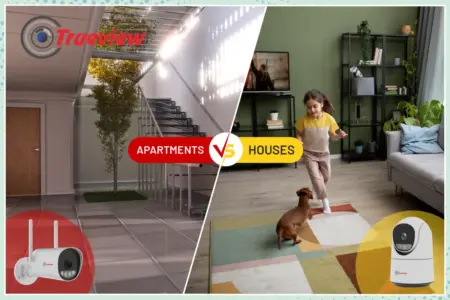
Most people buy a CCTV camera for home, get it installed, and assume they are covered. Then something happens – a parcel goes missing from outside the door, someone enters through the back, or a vehicle gets scratched in the building parking. They check the footage only to find the camera was pointing at the wrong spot. Or it caught the incident at the edge of the frame, but not clearly enough to identify anyone.
The camera wasn’t the problem. The placement was. This is one of the most common mistakes homeowners make. They focus on buying the right camera but spend very little time thinking about where to put it and why. A well-placed average camera will always outperform a well-spec’d camera in the wrong spot.
In this blog, we will cover why placement matters more than most people realise, and how apartments and independent houses differ in their surveillance needs. We will also explain what Trueview CCTV Cameras work best for home use, and what to keep in mind before you set up. Keep reading!
Why Placement Matters More than the Camera Itself
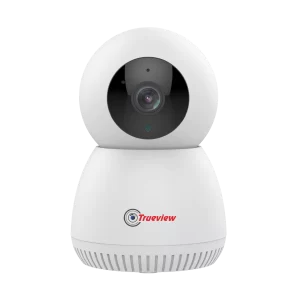
A camera can only record what it can see. Resolution, night vision, and motion detection all become irrelevant if the lens is pointed at the wrong area.
Good placement means covering the spots where a threat is most likely to enter, approach, or linger, before it reaches your door.
It also means positioning cameras so they capture usable footage – clear angles, correct height, no obstructions, and enough light reach for night identification.
Bad CCTV Camera for home placement means you have footage, just not footage of what actually happened.
The Three Things Every Home Camera Placement Must Cover
- Entry and Exit Points: Every door, gate, or opening a person could use to access your home
- High-risk Zones: Parking areas, staircases, corridors, or areas where valuables are stored or accessed
- Approach Paths: The route someone would take before reaching your door, not just the door itself
Most homeowners cover the door. Very few cover the approach. That’s where the gap is.
Apartments Vs Independent Houses – Why They Need Different Strategies
An apartment and an independent house are fundamentally different surveillance environments. Treating them the same leads to poor coverage.
In an apartment, your private space starts at your front door. Everything before that, the building entrance, the lobby, the lift, the corridor, is shared and usually covered by the building’s own CCTV system. Or it’s supposed to be.
The problem is that building CCTV systems is managed by society, not by you. You have no control over whether they are functioning, whether footage is retained, or whether anyone checks them proactively. In many societies across India, building cameras are either poorly placed, outdated, or simply not monitored.
Your personal home camera needs to cover what the building system misses, while working within the constraints of your flat.
Key constraints in apartments:
- You typically cannot drill holes or mount hardware on common area walls
- WiFi signal may weaken as you move away from your router, especially in concrete buildings
- You are covering a smaller perimeter – primarily your front door and the immediate approach
- Internal monitoring matters, especially if you have domestic help, children, or elderly family members at home
Independent Houses – More Perimeter, More Entry Points, More Flexibility
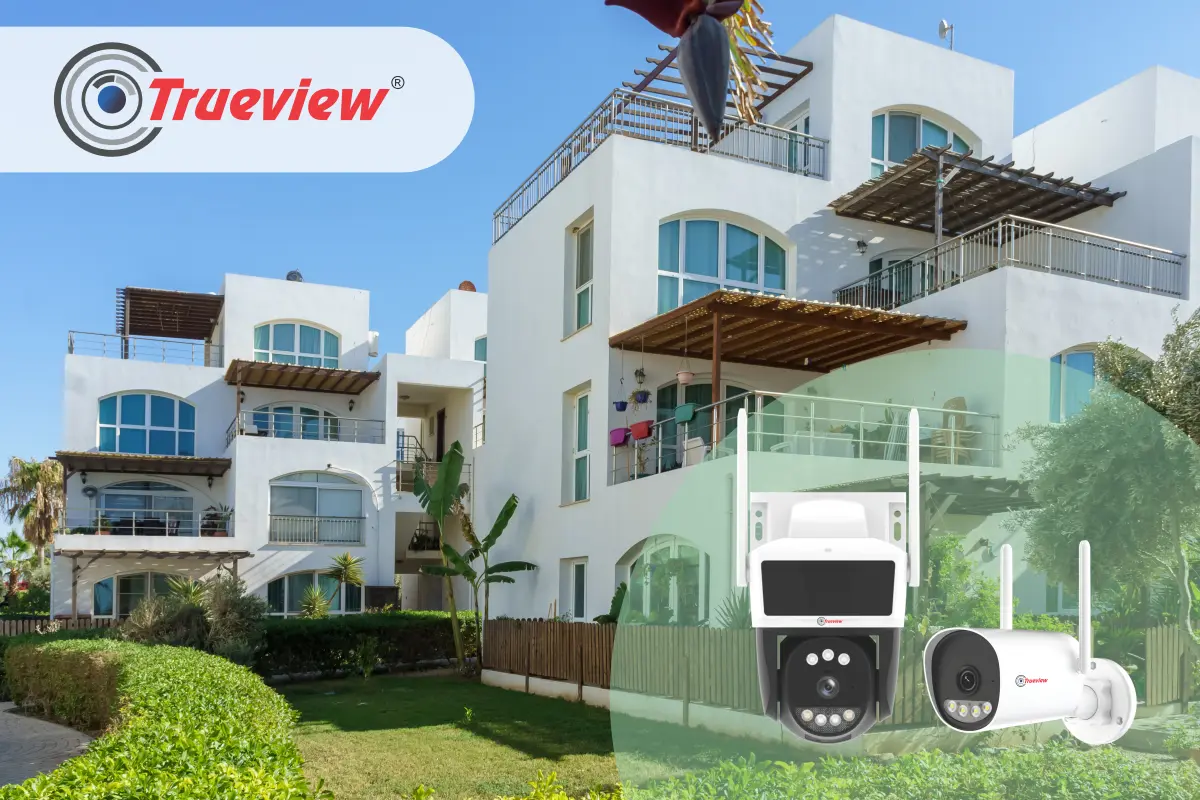
An independent house gives you full control over every wall, every gate, and every outdoor surface. You can drill, cable, mount, and position cameras anywhere you need. But that flexibility comes with a bigger challenge – there is much more to cover.
An independent house typically has a main gate, a front door, a back door or rear access, a driveway or parking area, side walls, a terrace, and often a garden or open compound. Each of these is a potential entry point. Missing even one creates a gap.
Key constraints in independent houses:
- A larger perimeter requires more cameras and strategic placement to avoid gaps
- Outdoor cameras must handle weather – rain, dust, direct sun
- Some areas, like the rear boundary or terrace. may be far from your router, requiring 4G cameras with a SIM card or WiFi extenders
- Night coverage is critical in open outdoor areas with poor ambient lighting
Best CCTV Camera for Home Placement Strategy for Apartments
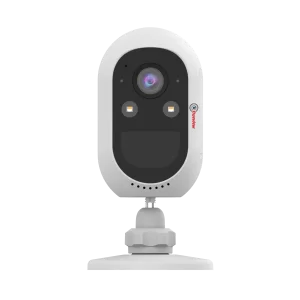
The Front Door Is Not Enough – Cover the Approach Too
The most common placement in apartments is a single camera pointed at the front door from inside the flat.
This captures whoever is standing at the door but misses the entire corridor, which means you see the person only when they are already at your threshold, not as they approach.
A better approach is to place a camera that covers both the door and the stretch of corridor leading to it.
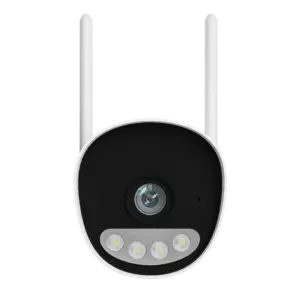
A wide-angle Wireless WiFi camera placed at the top corner of the door frame, angled slightly outward, covers the door and several feet of the corridor without needing to mount anything on common area walls.
Monitor Your Parking Bay Personally
Building parking areas in Indian societies are shared spaces, and the building’s CCTV rarely covers every individual bay. If your vehicle has been scratched, tampered with, or broken into, the society camera is often too far away or poorly angled to provide usable footage.
A compact wireless WiFi camera or a 4G camera with SIM card placed near your designated parking spot gives you dedicated coverage of your vehicle, with alerts sent directly to your phone.
In basement parking where WiFi is weak, a 4G camera with a SIM card is a practical alternative.
Indoor Monitoring for Homes with Domestic Help or Elderly Members
Inside the flat, the living room, kitchen entry, and main hall are the most important zones to monitor, especially if you have domestic help visiting during working hours or elderly family members at home alone.
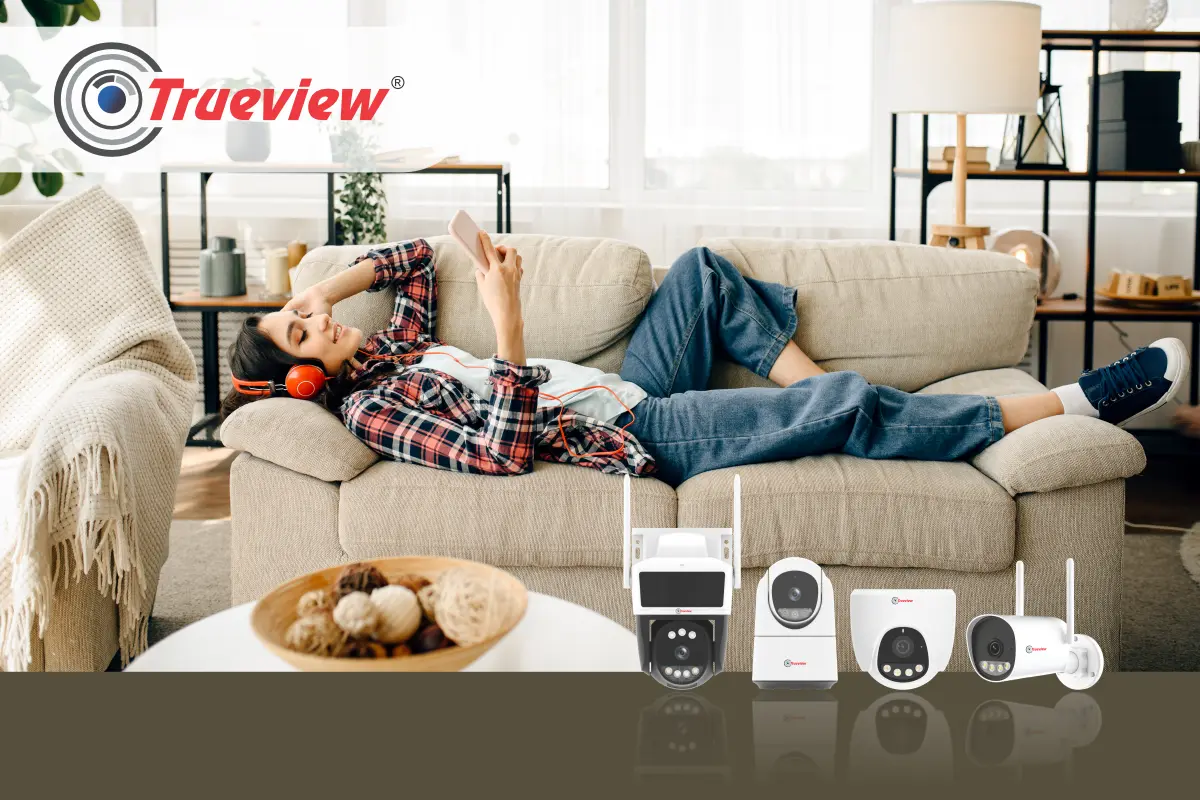
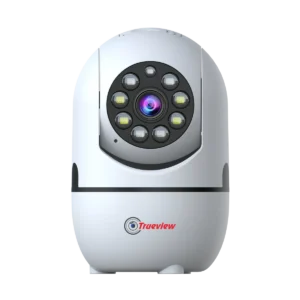
A compact WiFi cube camera or a Pan/Tilt camera placed on a shelf or mounted in a corner gives you a live feed and instant motion alerts from anywhere. Trueview Indoor Wireless WiFi Cameras are designed to blend into home spaces – compact, clean, and non-intrusive.
Takeaway
A CCTV camera for home is only as good as where you put it. The camera itself is secondary to the placement strategy.
Apartments need focused coverage of the front door approach, personal parking, and indoor zones – within the constraints of a rented space and shared building infrastructure. Independent houses need a layered strategy that starts at the main gate and works inward, covering every entry point, the driveway, side boundaries, and rear access.
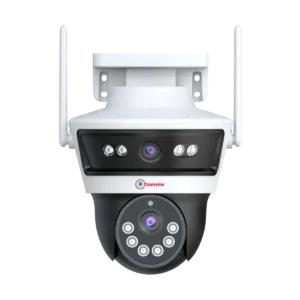
Trueview WiFi and 4G CCTV Camera for Home gives you the flexibility to cover both environments properly – compact indoor cameras for apartments, weatherproof outdoor cameras for independent houses, and 4G camera with SIM card for locations where WiFi doesn’t reach.
The placement guide in this blog gives you the strategy. Trueview gives you the cameras to execute it.
About Trueview

Trueview is a proudly Indian brand, designed and manufactured in Chhatrapati Sambhajinagar (Aurangabad), Maharashtra. We build surveillance and display solutions for homes, businesses, vehicles, and public spaces across India, under the Make in India initiative. Our product range covers CCTV Cameras, Video Walls, Digital Signage, All-in-one Computers, and smart surveillance systems – all managed through the True Cloud app on Android and iOS.
Ready to set up the right coverage for your home? Invest in the best CCTV Camera for home now. For more information or queries, feel free to contact us. Our team is always happy to assist you!